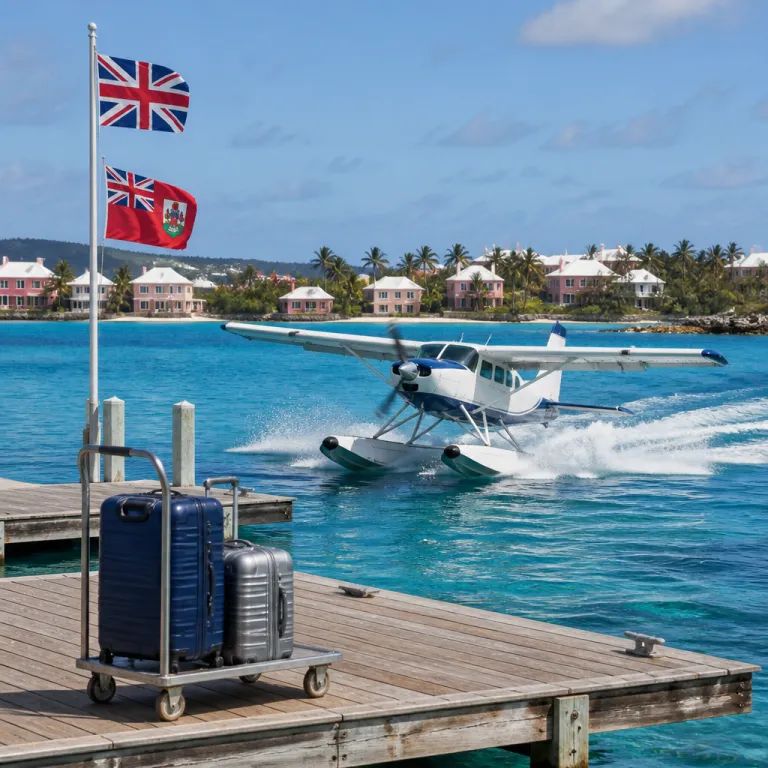
Is Bermuda part of the United Kingdom and why this matters for travellers
Bermuda is not part of the United Kingdom in the same way as England or Scotland, yet it is firmly under British sovereignty. It is classified as a British Overseas Territory, which means the island enjoys extensive self-governance while remaining under the authority of the British government and the monarch. When you book a hotel in Bermuda you are therefore staying in a place that is both distinct from the United Kingdom and still constitutionally linked to the wider British realm.
To answer the question of Bermuda’s relationship with the United Kingdom precisely, the islands form one of the oldest overseas territories in the world. The territory sits in the North Atlantic, far from North America and North Carolina, but its political status is anchored in London through the framework that governs all British Overseas Territories. This structure gives the Bermuda government control over most domestic matters, including tourism, hotels and international business, while the British government retains responsibility for defence and foreign affairs under arrangements set out in UK legislation such as the British Overseas Territories Act 2002.
The head of state is King Charles III, represented locally by the Governor of Bermuda, who oversees constitutional matters on behalf of the British government. Day-to-day decisions about where new resorts rise along the Atlantic Ocean, how the Royal Naval Dockyard is redeveloped, and how the House of Assembly regulates hotel licensing are taken by elected Bermudian politicians. When you compare Bermuda with islands that are fully independent, you will notice that British citizenship provisions, legal stability and the presence of English common law courts create a reassuring backdrop for high-end hotel investment.
How Bermuda’s political status shapes its iconic resorts
The question of whether Bermuda is part of the United Kingdom becomes very practical once you look at how resorts operate. Because Bermuda is a self-governing overseas territory, the Bermuda government can tailor tourism policies to the island’s limited area of 54 square kilometres and its population of around 64,000 people. This compact scale encourages careful planning of luxury properties along the North Atlantic coastline, rather than mass development that could overwhelm the Somers Isles.
Inside the House of Assembly in Hamilton, elected members debate zoning rules that decide which islands and coves may host new hotels or expanded spa wings. The Government of Bermuda also works with the British government and international partners on aviation and transport arrangements, which influence how many commercial flights can land from the United States, Canada and the United Kingdom, and this in turn shapes room rates and occupancy levels. Because defence and foreign policy remain with London, international security arrangements can be managed at a distance, helping preserve the calm atmosphere that guests expect in oceanfront suites.
Travellers often ask whether the island feels more British or more North American when they arrive at their resort. You will notice English-style legal protections, British-style driving on the left and the presence of British Overseas Territory symbols on official buildings, yet the cultural mix also reflects strong ties with North America and the nearby United States. This blend allows hotels to offer English afternoon tea in a lounge that overlooks the Atlantic Ocean, while the bar menu might lean towards North Carolina-style barbecue or New England seafood to appeal to a broad international clientele.
From Sea Venture to modern luxury: history every hotel guest should know
Understanding the history behind the question of Bermuda’s constitutional link to the United Kingdom adds depth to any hotel stay. The story begins with the ship Sea Venture, which wrecked on the reefs of the Somers Isles during a voyage to North America and led to permanent English settlement soon after. From those early days the island developed as a strategic British territory in the North Atlantic, guarding sea routes between the United Kingdom, the Caribbean and the eastern seaboard of the United States.
Over time Bermuda evolved from a remote outpost into a prosperous centre for international business and high-end tourism, and this transformation is visible in today’s resorts. During periods of war the islands hosted military facilities, including a major naval dockyard and air installations that supported Allied operations across the Atlantic Ocean. Those same stone fortifications and dockyard warehouses have now been converted into museums, restaurants and waterfront hotels, allowing guests to sleep within walls that once echoed with the sounds of British naval activity.
When you stroll from your hotel towards the historic town of St George, you walk through streets that have been continuously governed under English law since the early seventeenth century. The continuity of British rule, first through colonial administrators and now through the modern framework of a British Overseas Territory, has created a stable environment that reassures foreign investors and hotel operators. For guests this means that when you choose between several iconic resorts you are benefiting from centuries of accumulated expertise in hosting travellers, merchants and naval officers on this small but influential island.
How governance and law affect your stay in Bermuda’s resorts
Because Bermuda is a British Overseas Territory, its constitutional arrangements have direct implications for hotel guests. The local parliament, made up of the House of Assembly and an appointed upper chamber, passes laws that regulate everything from hotel safety standards to employment rules for international staff. At the same time the British government, acting for the wider United Kingdom, retains responsibility for foreign relations and defence, which ensures that embassies and international organisations treat the islands as a stable, predictable jurisdiction, as reflected in guidance from the UK Foreign, Commonwealth & Development Office.
The Bermuda government manages internal affairs without a prime minister in the Westminster sense, instead operating under a premier who leads the elected administration. This system sits beneath the authority of King Charles III as monarch, represented by the Governor of Bermuda, and together they provide the constitutional framework that explains how Bermuda is connected to the United Kingdom in legal terms. Travellers benefit from this arrangement through strong consumer protections, clear property rights for resort developers and a court system rooted in English common law, all of which underpin the confidence of international hotel brands.
Another practical outcome of this status is the way British citizenship and local Bermudian status intersect. Under the British Overseas Territories Act 2002 many residents are eligible for forms of British nationality, while others have close ties to North America and the United States, creating a cosmopolitan workforce that speaks fluent English and understands the expectations of global travellers. When you check into a hotel overlooking the Atlantic Ocean you are therefore engaging with a service culture shaped by both British traditions and North American hospitality, supported by regulations that balance local interests with the needs of foreign visitors.
Planning your hotel stay: geography, access and iconic resort locations
The geography of Bermuda is central to understanding where its most iconic resorts sit. The islands form a small archipelago in the North Atlantic, roughly east of North Carolina and well off the main shipping lanes of North America. This remote yet accessible position in the Atlantic Ocean has always made the territory attractive to both the British government and the United States, first for naval strategy and now for tourism and international business.
Most hotels cluster along the south shore and near Hamilton, where pink sand beaches and calm coves face the open sea. When you evaluate whether to stay near the historic Royal Naval Dockyard, in the capital or close to St George, you are really choosing between different expressions of the same British Overseas Territory identity. The dockyard area offers converted stone buildings and views across the North Atlantic, Hamilton provides urban energy and easy access to the House of Assembly district, while St George immerses you in the earliest chapter of English settlement.
Access is straightforward despite the island’s isolated setting, with frequent flights from the United Kingdom and major cities in the United States. Typical non-stop journeys take around two hours from East Coast hubs such as New York or Boston and about seven hours from London, depending on the route and airline. If you are comparing refined island escapes from the UK, specialist platforms such as Bermuda vacation packages from the UK can help match your preferred resort style to the most convenient arrival options.
What being a British Overseas Territory means for safety, money and culture
For many travellers the underlying concern behind asking whether Bermuda is part of the United Kingdom is safety and reliability. As a British Overseas Territory, Bermuda benefits from the diplomatic reach of the United Kingdom and long-standing security cooperation with allies. During times of regional tension or war, coordination between the British government, the Bermuda government and partner states helps maintain stability across the North Atlantic.
On a practical level you will notice that the official currency is the Bermudian dollar, yet the US dollar is widely accepted in hotels, restaurants and shops. This reflects the island’s close economic links with North America and its role as a hub for international business, even while the legal framework remains anchored in English law and British Overseas Territory regulations. The combination of British-style institutions, including the House of Assembly and independent courts, with North American financial flows gives resorts a robust foundation for long-term investment.
Culturally the islands blend British, Caribbean and North American influences in a way that feels distinctive. You might sip afternoon tea in a hotel lounge decorated with portraits of British monarchs, then step outside to hear local musicians playing near the waterfront where cruise ships from the United States dock. This fusion is a direct product of centuries of contact between the Somers Isles, the wider United Kingdom and neighbouring regions, and it is one of the reasons guests often return to the same island resorts year after year.
Key statistics that shape the hotel experience in Bermuda
- The population of Bermuda is approximately 64,000 people, according to Bermuda Government Statistics, which means resorts operate in an intimate market where service can be highly personalised.
- The total land area of the islands is about 54 square kilometres, also reported by Bermuda Government Statistics, so hotel development is naturally limited and prime Atlantic Ocean frontage is carefully protected.
- Bermuda has been under continuous English and then British rule since early colonisation, with self-governance granted in the seventeenth century, creating one of the world’s longest-running parliamentary traditions.
- The territory’s location in the North Atlantic, roughly 1,000 kilometres east of North Carolina, places it within easy flight reach of both the United States and the United Kingdom while keeping it north of many storm tracks that affect more southerly islands.
FAQ: political status, travel practicalities and hotel choices
Is Bermuda part of the United Kingdom for legal and travel purposes
Bermuda is not part of the United Kingdom in the same way as the home nations, but it is a British Overseas Territory under the sovereignty of the British government and the monarch. This means that while the Bermuda government runs internal affairs, London handles defence and foreign relations. For travellers the territory has its own immigration rules, so you should always check entry requirements separately from those of the United Kingdom, using official sources such as the UK Foreign, Commonwealth & Development Office and Bermuda Government guidance.
Does Bermuda have its own government and parliament
Yes, Bermuda has a local parliament that consists of the elected House of Assembly and an appointed upper chamber. The administration is led by a premier rather than a prime minister, operating under a constitution that reflects English legal traditions. This structure allows the islands to manage tourism, hotel regulation and international business while remaining under overall British sovereignty.
Who is the head of state in Bermuda
The head of state in Bermuda is King Charles III, who is also the monarch of the United Kingdom and other realms. He is represented on the island by the Governor of Bermuda, who oversees constitutional matters and certain reserved powers. Day-to-day governance, including decisions that affect resorts and tourism, is handled by elected Bermudian officials.
Is Bermuda closer to North America or to Europe geographically
Geographically Bermuda lies in the North Atlantic Ocean, closer to North America than to Europe. The islands sit roughly east of North Carolina and are a relatively short flight from several cities in the United States and Canada. Flights from the United Kingdom take longer but are still manageable for a transatlantic holiday focused on iconic island resorts.
How does Bermuda’s status influence hotel safety and standards
Bermuda’s position as a British Overseas Territory means that hotel safety, building codes and consumer protections are shaped by both local legislation and broader British legal principles. The Bermuda government enforces strict regulations on fire safety, structural integrity and environmental impact, especially along the fragile Atlantic coastline. This framework gives international travellers confidence that resorts meet high standards comparable to those in the United Kingdom and other advanced jurisdictions.
References
- Bermuda Government Statistics
- UK Foreign, Commonwealth & Development Office
- British Overseas Territories Act 2002
- Bermuda Tourism Authority